Winter Storm Fern Was A Stark Reminder That Outage Communication Is Critical
February 19, 2026
Winter 2026 marched into the year like a lion, kicking the door down and making itself comfortable. And while we collectively held our breath for what the great groundhog meteorologists would predict about an early reprieve from winter’s icy grip, the aftermath of Winter Storm Fern was still fresh in our minds.
From January 22–27, Winter Storm Fern swept across large portions of North America, bringing heavy snow, ice, sleet, and record-setting cold from the U.S. South and Midwest to the Northeast and Central and Atlantic Canada. More than a foot of snow fell across large portions of New Mexico, Pennsylvania, New York, Massachusetts, and Ontario, with some areas recording totals of more than two feet. Ice accumulation reached up to an inch in parts of the South, downing trees and power lines and leaving communities navigating dangerous conditions for days.
At its peak, the storm caused over one million power outages, with hundreds of thousands of customers still without service days later. Tragically, dozens of storm-related deaths were reported nationwide, a sobering reminder that severe weather isn’t just disruptive; it’s dangerous.
For many utilities, it was the first real test of the 2026 storm season.
When the Grid Is Under Pressure, Communication Carries the Load
As the storm intensified, customers turned en masse to digital channels for answers. Across utilities using KUBRA’s outage maps and notifications, engagement surged:
- More than 20.3 million Storm CenterTM outage map page views were recorded over five days, with over 10 million on January 25 alone.
- 14.6 million proactive outage notifications were sent via Notifi®, with a peak of 7+ million in advance of the storm on January 23.
- Daily usage peaked during the storm’s most severe periods, underscoring the critical role of self-service and real-time updates during fast-moving events.
- The spike wasn’t accidental. It followed the storm's natural rhythm. Early notifications alerted customers as outages emerged, while outage maps became the primary destination for monitoring restoration progress in real time.
Built for the Surge: Performance When It Matters Most
Behind the scenes, Storm Center continued to perform under heavy load.
Even as outage volumes surged:
- From January 23 to 25, outage data was processed in approximately 65 seconds.
- Maps refreshed in under two minutes after new data was received, ensuring customers always had access to the latest information.
- The system provided visibility into active outages affecting one million households and businesses.
The result was timely, reliable communication even as conditions changed rapidly and demand peaked.
How One Large Utility Kept Customers Informed at Scale
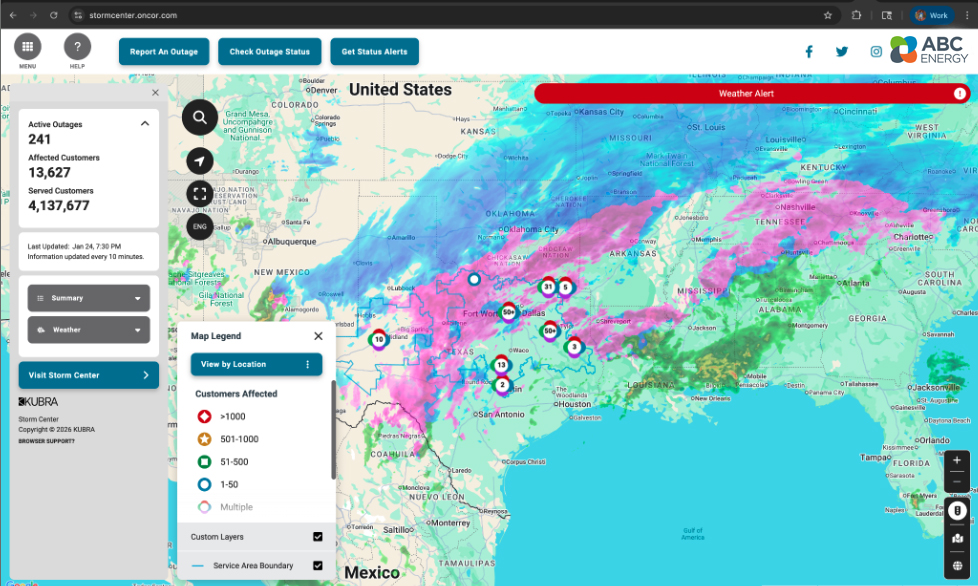
During Winter Storm Fern, one large U.S. utility serving over four million customers and managing hundreds of outages relied on Storm Center to navigate extreme demand while maintaining clear, consistent communication.
As outages increased:
- Over 400,000 customers actively used the outage map, returning approximately five times throughout the storm.
- Active users spent an average of 1.36 minutes engaged with the map, checking outage data for their area, and reading alert messages.
- At the height of the storm, this utility’s most viewed outage map reached two million views over the five-day period, reflecting intense demand for real-time visibility.
Rather than overwhelming the utility’s contact centers, customers could self-serve the information they needed when they needed it
Why This Matters: Communication Is Part of Reliability
Winter Storm Fern reinforced a critical truth: outage communication is operational infrastructure.
Outage maps provide situational awareness. Proactive notifications set expectations. Together, they:
- Reduce uncertainty
- Deflect inbound call volume
- Build trust during high-stress events
For utilities building the business case for outage maps, this resource breaks it down: Making a Business Case for Outage Maps
And for a broader look at preparing for and responding to extreme events: Communicating Through Crisis: Identifying Hazards and Overcoming Challenges
Looking Ahead: The Storm Season Is Just Getting Started
Winter Storm Fern may have been the opening act, but it won’t be the last major weather event utilities face this year. As storm seasons grow longer and more unpredictable, intelligent outage communications aligned with customer preferences and your data will define the customer experience during major events.
For more insight into what utilities can expect and how to prepare, listen to our What Utilities Can Learn From the Latest Storm Season, where our experts share key takeaways from the 2024 storm season, outage communications best practices, and what’s coming next.
Because when the weather turns, customers don’t just want power back. They want answers fast.