Your Customers Can't Pay What They Don't Understand
August 27, 2026
Part 3 of KUBRA's 2026 Utility Customer Experience Blog Series
Bill clarity as a trust and revenue issue, not a design issue
Confusing bill? The immediate reaction is to blame the design. And that is definitely a big factor. But a design flaw doesn’t usually stay just a design flaw. When bills aren’t clear, it can quickly turn into a trust and revenue problem. Those are exactly the type of issues utilities have to stay on top of.
Think about a customer opening their utility bill, scanning a list of line items they don’t recognize, usage figures they can’t interpret, and fees with no clear explanation. Not all of them call right away for clarification. Some put the bill aside, intending to deal with it later. But later doesn’t always come.
When you multiply that moment across thousands of customers every month, utilities don’t just have a design problem. Billing uncertainty causes the slow erosion of credibility. This is problematic for utilities because, for most customers, their bill is the most regular touchpoint with their utility. If it can’t deliver the information they need in a way they understand, it’s going to affect how they feel about their utility and, sometimes, even how quickly they pay.
The Numbers Don't Lie, Bills Are Causing Confusion
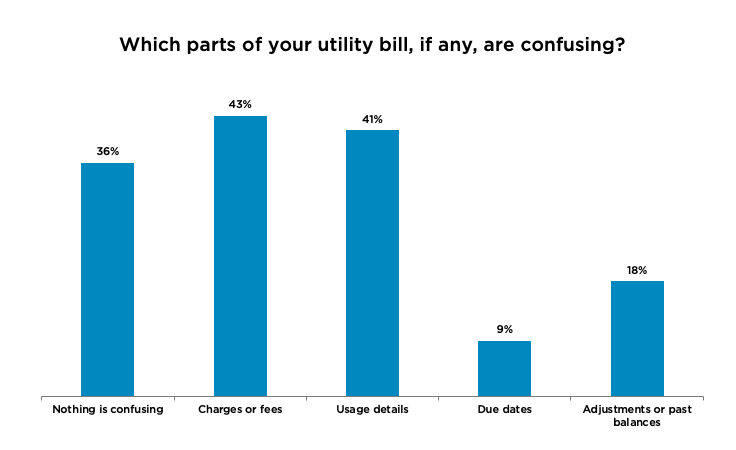
There’s no arguing that utility bills aren’t setting customers up for success or a good experience. Only 36% of customers report zero confusion when reading their utility bill. That means nearly two-thirds don’t fully understand their bills.
Our recent research found the biggest sources of uncertainty are:
- Charges and fees: 43%
- Usage details: 41%
- Adjustments and past balances confusion: 18%
- Due date confusion: 9%
This should trigger alarm bells for any utility, given that the top two are also the most fundamental elements of any bill.
The Real Issue Is Customer Confidence
We also asked customers how confident they feel about what they owe and why when they receive their bill, and this is what they said:
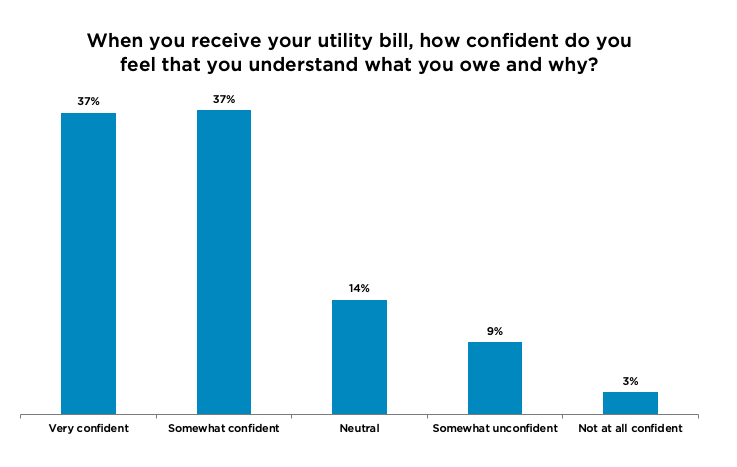
Being transparent and clear is a clear opportunity for utilities to improve the bill experience. Every customer who doesn’t understand a charge on their bills has a decision to make. Some will call in. Some might delay payment. Some will even dispute the bill. None of those outcomes builds credibility or trust, but all come with a cost to utilities.
And this pattern compounds because billing is often the most frequent, and sometimes the only, regular touchpoint a utility has with its customers. This is their only opportunity to connect and build trust, and right now, many utilities are missing the mark.
Beyond Charges: The Hidden Gaps in Every Utility Bill
Charges weren’t the only source of confusion on utility customers' bills.
- Only 34% strongly agree that their bill is clear and easy to follow
- Only 31% say that their bill helps them understand usage and costs
- Only 22% strongly agree that their bill guides them to information about available assistance programs
- Only 30% strongly agree that their bill helps them understand what payment options are
As you can see, a majority of customers are confused about many aspects of their bills, and that comes at a cost. Confused customers pay late, or don’t pay at all, until they get some clarity. This creates collection risk, late fee disputes, and costs from overdue accounts, which increase operational expenses. Every dollar spent recovering a late payment could have been avoided with clearer billing.
The Trust Angle Nobody’s Talking About
Here’s what makes bill clarity a strategic issue rather than just an operational one: a customer who doesn’t trust their bill doesn’t trust their utility.
Customers today are measuring their utility billing experience against their bank app, their food delivery app, and their streaming service. All of which are built around one thing: making it immediately clear what they’re paying for and why. When a utility bill can’t meet that same standard, it doesn’t just feel dated; it feels untrustworthy.
Customer tolerance for complex, unclear bills is decreasing faster than most utilities are addressing the issue. The opportunity to proactively get ahead of this before it becomes a customer-satisfaction crisis, a regulatory issue, or a public complaint is narrowing.
Distrust doesn’t stay contained to the billing experience. It bleeds into other parts of the organization. Customers who are unsure about the accuracy of their bills are less likely to enroll in AutoPay. Why would you automate payments for charges you don’t fully understand? They’re less likely to go paperless. They’re more likely to push back on rate changes. They’re harder to reach with information about assistance programs, because the credibility needed to deliver that message is already gone. And all of it shows up in the metric utilities already track closely: CSAT.
Utility billing is the foundation of the customer relationship, and when it isn’t strong, everything built on it wobbles.
What Utilities Can Do: Clarity Is a Strategic Investment
The good news is that bill clarity is fixable without reinventing the customer experience from scratch. It requires treating the bill as a product rather than just an accounting document. A few places to start:
- Conduct a bill readability audit that includes real customers, not just internal staff, designers, and billing experts
- Replace tariff codes with plain-language descriptions
- Add context to unusual or variable charges proactively
- Improve visual hierarchy by making the most important information (amount due, due date, payment options, and key changes) stand out through layout, spacing, and typography
- Make assistance programs and payment options visible within the bill itself
- Provide clear next steps and contact options when customers have questions
A clearer bill isn't a gift to the customer; it's a business decision.
Ready to make your bill clearer and easier for customers to understand? Explore KUBRA’s Bill Redesign Services by clicking here.
This is the third post in KUBRA’s 2026 Utility Customer Experience Blog Series, based on original research from our white paper, The Utility Billing and Payment Journey: Identifying Where Customer Friction Still Exists.
Read the full white paper